Beginnings
I began making scanner photographs shortly after 9/11, when a job took me four hours from Manhattan and left me stranded between an industrial park and a hotel three days a week. Boredom, restlessness, and the urge to use the equipment at hand became the unlikely beginning of a new body of work. At the time, I had never heard of anyone else using a flatbed scanner to make art.
Eventually I discovered others experimenting with scanners, but their work seemed largely limited to pets or simple studies of flowers. No one else seemed to be approaching it from a background in Conceptual Art or Sculpture like mine. My first thought was that it might be a new way of recording mass visually, rather than just a vehicle for making pictures.
Initially, my subjects were my friends at work, which then quickly expanded to include friends from outside of work, who happily met me at “the office” to participate in what I was doing. Their trust in me and faith in what I was doing inspired me and was an essential part of the process. Between 2002 and 2011, I expanded beyond this pool of intimates for a portrait project of Detroit musicians and artists, many who I did not know personally. Although many were strangers when we met, they rarely felt like strangers for long. They also intuitively trusted in what I was doing and never complained about the “odd” results.
How to Scan
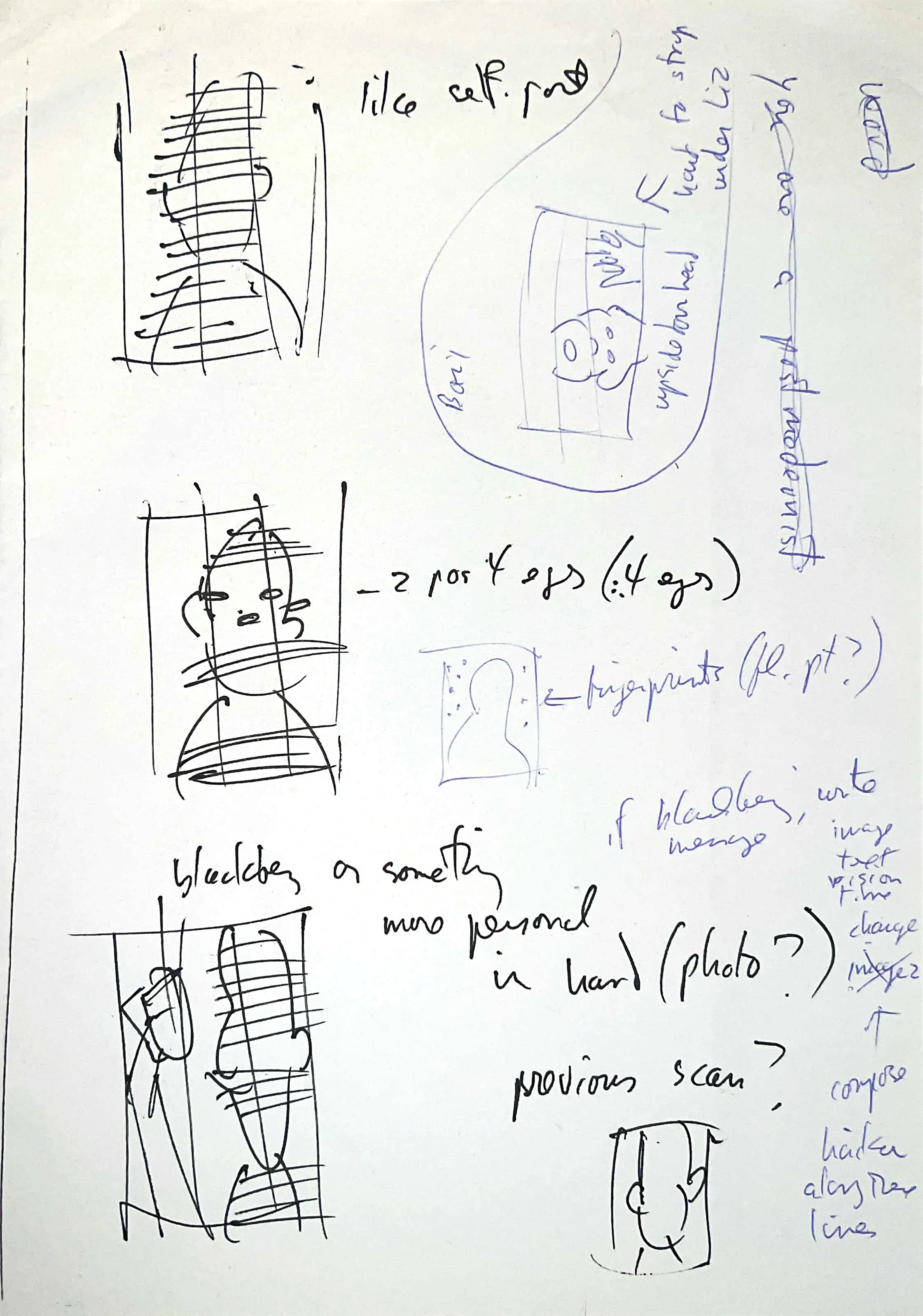
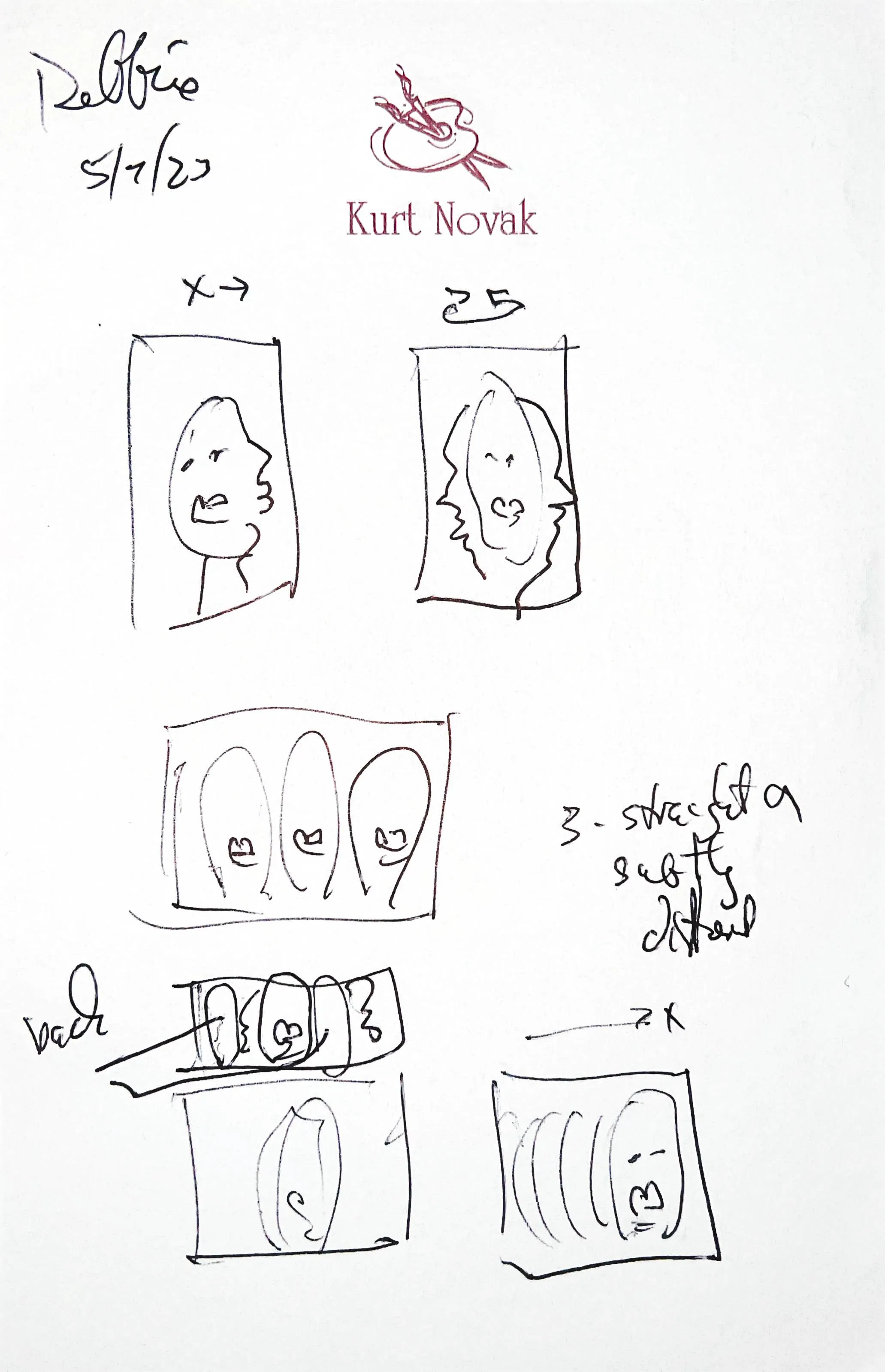
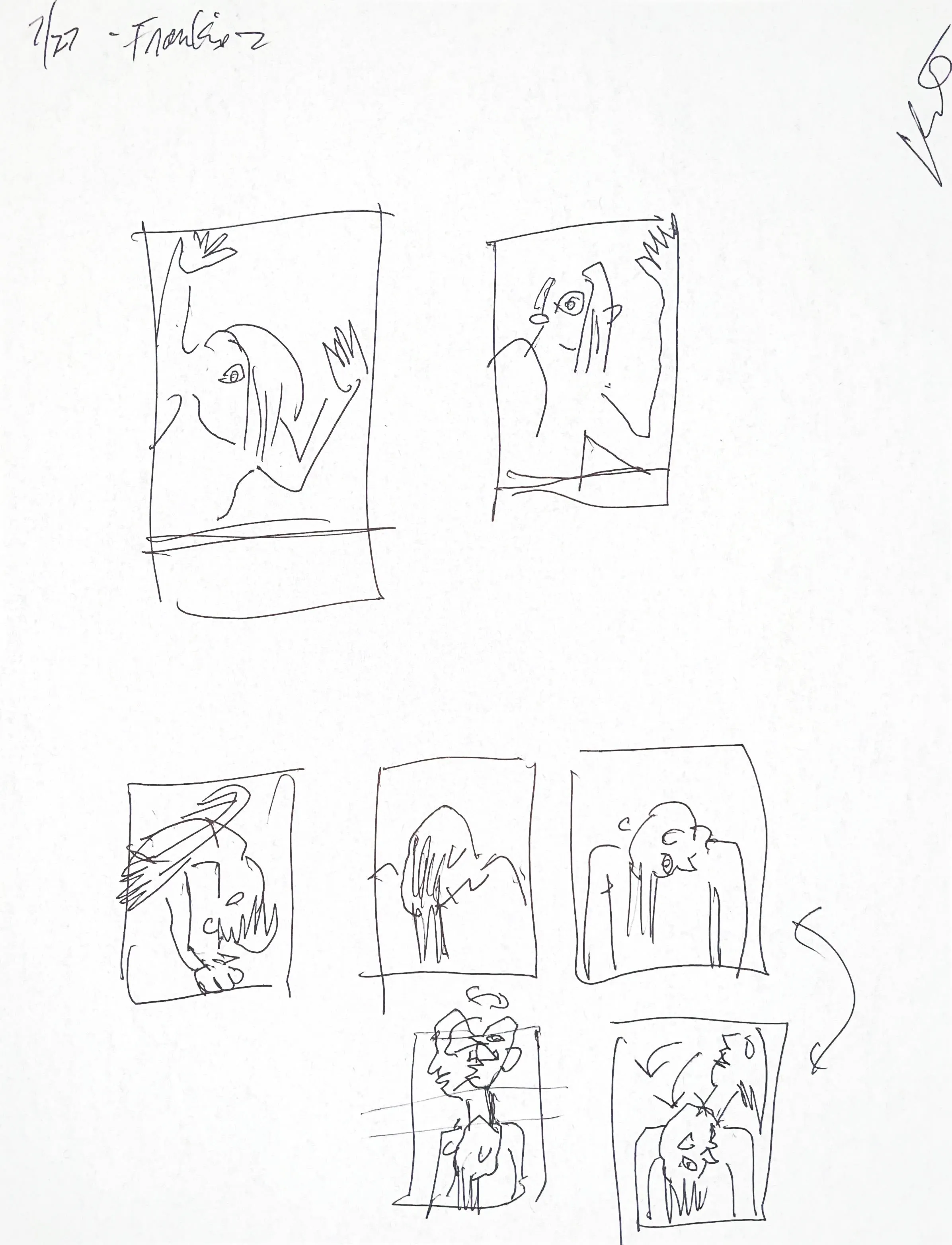
I used to humorously describe the practice as: “Bend over, put your face on the glass.” In reality, every one of my portraits began with rough sketches that mapped where the body would be placed and how it would move. During a scan I direct my subjects like a physician conducting an examination: “Turn your head to the right a little, now back to where it was…keep your abdomen where it is, but slide your hips to the left…” Frequently I guide them gently with my hands.
When finished, we take a quick look at what we recorded and decide whether we should make another attempt, or move on to a different idea.
For the record, none of the images on this site have been digitally manipulated. They are direct records of a live photographic event. Although each portrait was carefully planned, the final image depends on what happened during the scan itself. Some demand one’s attention, many do not.
Meaning
These portraits are not about making people unrecognizable. They are attempts to discover something that ordinary photographs often overlook.
Medical imaging reveals what lies beneath the surface of the body. I use a flatbed scanner for a different purpose, not to diagnose disease, but to explore human presence.
During my scans, which can last anywhere from one to eight minutes, my subjects gradually become quiet and introspective. I ask them not to speak, to breathe carefully so condensation doesn’t form on the glass, and I guide their movements while speaking in a calm voice, so as not to excite them. The process requires patience from both of us, but above all, faith in each other and respect.
This is what keeps the work alive. Every scan is an act of discovery, for the sitter, for me, and eventually for the viewer. Because every encounter is different, every portrait becomes a record not only of an individual, but of a unique moment shared between two people. And an anomalous presence, made visible by a very curious procedure.
Here are a few representative sketches. They are not finished drawings, rather purposely rough frameworks for physical performance.
They weren’t intended to be readable by anyone but myself.